
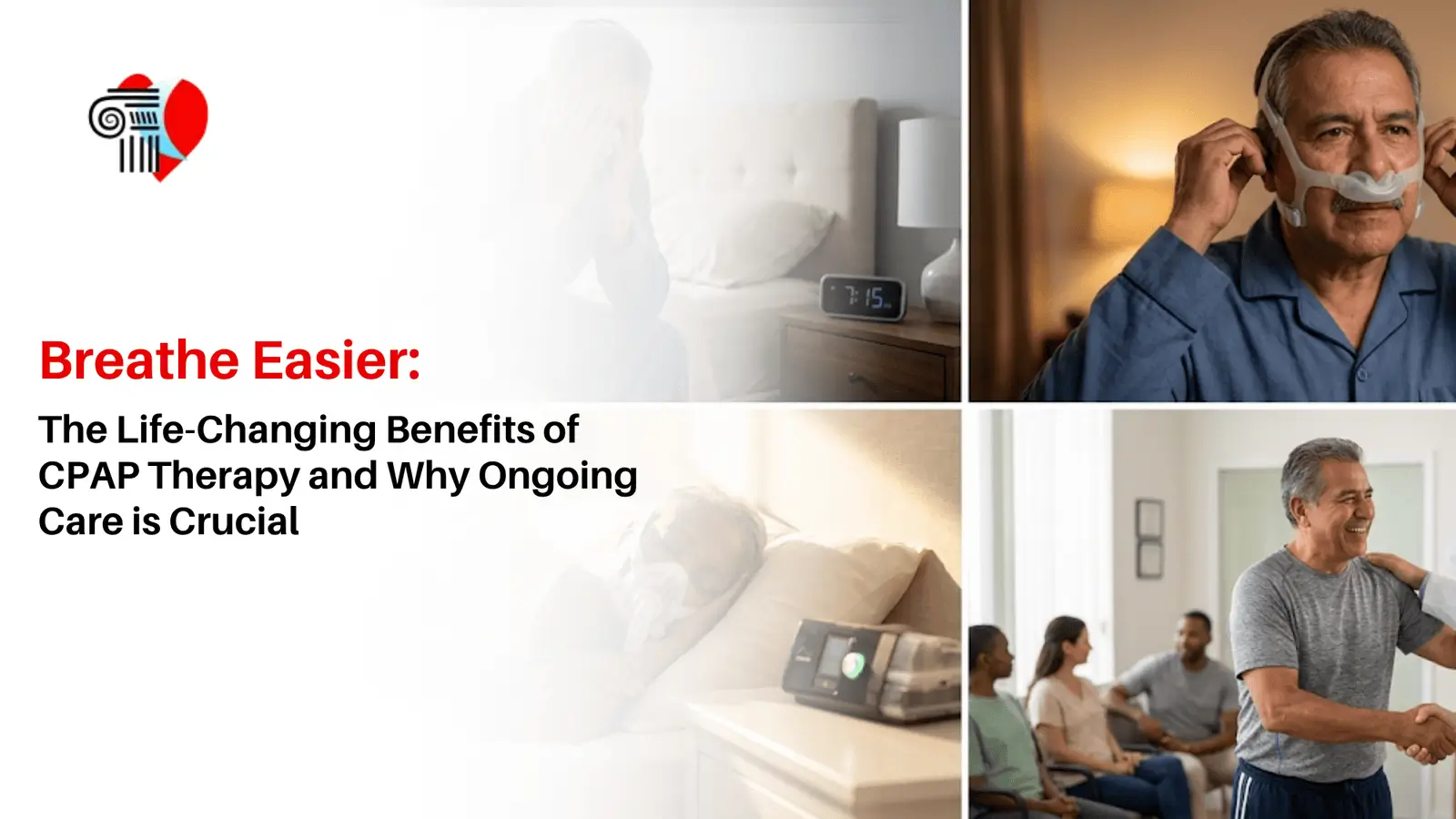
Breathe Easier and Live Longer: How CPAP May Help Prolong Life
-
Medical Director, Medical Office Force LLC | Athens, Georgia
Alumnus: SMS Medical College, Emory University, University of Alabama at Birmingham

Location: Athens Sleep and Wellness Center at Athens Heart Center | 2005 Prince Ave, Athens, GA 30606
About the Author: Subodh K. Agrawal, MD, FACC, is a dual board-certified cardiologist and sleep medicine specialist serving patients in Athens, Georgia. With more than 45 years of clinical experience, Dr. Agrawal's practice brings together cardiovascular medicine and sleep medicine, including the diagnosis and management of obstructive sleep apnea and related conditions.
If you wake up exhausted despite spending enough time in bed, snore loudly, wake up gasping for air, or struggle with daytime fatigue, the problem may be more than a poor night's sleep.
You may have obstructive sleep apnea (OSA), a common sleep-related breathing disorder in which the upper airway repeatedly narrows or becomes blocked during sleep. If you suspect you may have this condition, undergoing a home sleep study in Athens is often the first step toward getting evaluated.
Sleep apnea can affect far more than your energy levels. Repeated breathing interruptions can fragment sleep, cause changes in blood oxygen levels, and place stress on the cardiovascular system. OSA has been associated with conditions including high blood pressure, cardiovascular disease, atrial fibrillation, diabetes, and stroke.
For years, physicians have known that CPAP therapy can improve breathing during sleep and reduce many symptoms associated with OSA.
Now, new research is adding an important finding to that discussion:
Can CPAP help people with sleep apnea live longer?
A large 2025 meta-analysis published in The Lancet Respiratory Medicine found that people with OSA who used CPAP had a 37% lower relative risk of death from any cause and a 55% lower relative risk of cardiovascular death compared with people with OSA who did not use CPAP. The analysis included more than 1 million people across 30 studies and found a dose-response relationship, meaning greater CPAP use was associated with better survival outcomes.
These findings provide important evidence for patients who wonder whether the effort required to use CPAP every night is worth it.
At the Athens Sleep and Wellness Center, we believe successful sleep apnea treatment involves more than simply prescribing a machine. It means helping patients breathe easier, use their therapy consistently, manage treatment problems, and understand how sleep health fits into their overall cardiovascular health.
Can CPAP Prolong Life? What the 2025 Research Shows
The question "Can CPAP prolong life?" has become increasingly important as researchers have examined the long-term consequences of obstructive sleep apnea.
In 2025, researchers published a large meta-analysis in The Lancet Respiratory Medicine examining the relationship between CPAP therapy and mortality in people with OSA.
The analysis included:
- More than 1 million people with OSA
- 30 studies in total
- 10 randomized controlled trials
- 20 real-world evidence studies
- An average follow-up period of nearly five years
The researchers reported three particularly important findings:
1. CPAP Was Associated With a 37% Lower Risk of Death From Any Cause
People with OSA who used CPAP had a 37% lower risk of all-cause mortality compared with people with OSA who did not use CPAP.
This is a relative risk finding. It does not mean that every person using CPAP will live a specific number of years longer, and it does not mean CPAP eliminates the risk of death.
It provides evidence of an association between CPAP use and better long-term survival in the populations studied. It does not mean that every individual patient will experience a 37% reduction in their personal risk of death.
2. Cardiovascular Mortality Was 55% Lower
The analysis also reported a 55% lower risk of cardiovascular-related death among people with OSA who used CPAP compared with those who did not.
This finding is particularly relevant because obstructive sleep apnea and cardiovascular health are closely connected. Patients treated through our cardiology and sleep medicine programs often see dual health benefits when sleep apnea is managed effectively.
People with OSA may also have other cardiovascular risk factors, including hypertension, obesity, diabetes, and atrial fibrillation. Treating sleep apnea can therefore be an important part of a broader cardiovascular health strategy.
3. More Consistent CPAP Use Was Associated With Greater Survival Benefit
The study reported a dose-response relationship: greater CPAP use was associated with a lower risk of death.
This reinforces something sleep specialists have emphasized for years: CPAP works when you use it. A CPAP machine cannot prevent airway obstruction on nights when it remains unused.
What Does "37% Lower Risk of Death" Mean?
This distinction is important when discussing medical research.
A 37% lower relative risk does not mean that CPAP guarantees an additional 37% of someone's lifespan.
For example, if two groups have different underlying risks of death, a relative reduction does not tell us the individual's exact change in life expectancy.
The study's finding means that, in the populations analyzed, people with OSA who used CPAP experienced a substantially lower observed risk of death compared with people with OSA who did not use CPAP.
The research provides evidence supporting a relationship between CPAP treatment and survival, but individual outcomes will vary.
Your age, OSA severity, cardiovascular health, diabetes status, blood pressure, weight, smoking history, other medical conditions, and consistency of CPAP use all matter.
For that reason, CPAP should be viewed as one important component of comprehensive health care rather than a guarantee of a particular lifespan.
What Does CPAP Do for Sleep Apnea?
Understanding how CPAP works helps explain why consistent treatment matters.
Obstructive sleep apnea occurs when the upper airway becomes narrowed or blocked during sleep. When airflow is restricted, breathing may become shallow or stop temporarily. The brain can respond by briefly arousing the person from sleep so normal breathing can resume.
These events can happen repeatedly throughout the night, often without the person remembering them the next morning.
CPAP addresses the underlying airway obstruction by delivering positive airway pressure through a mask. The pressure helps keep the upper airway open while you sleep.
This is sometimes described as a "pneumatic splint" for the airway.
When CPAP is working effectively, it can reduce obstructive breathing events and improve nighttime airflow.
That can lead to improvements in symptoms such as:
- Loud snoring
- Gasping or choking during sleep
- Frequent nighttime awakenings
- Daytime sleepiness
- Morning fatigue
- Difficulty concentrating
- Poor sleep quality
For many patients, one of the most noticeable changes is simply being able to breathe easier throughout the night.
Breathe Easier With CPAP: How Treatment Works
CPAP stands for Continuous Positive Airway Pressure.
CPAP helps keep the upper airway open while you sleep by providing positive airway pressure through a mask. When treatment is effective, it can reduce obstructive breathing events and improve nighttime airflow.
For many people, that can mean less snoring, fewer awakenings, less gasping, reduced daytime sleepiness, and better sleep quality.
The key is consistent use. CPAP can only treat obstructive breathing events while you are actually using the therapy.
Can You Live Longer With CPAP?
Based on the 2025 meta-analysis, there is substantial evidence associating CPAP use with lower mortality among people with OSA.
The study found lower risks of both all-cause and cardiovascular mortality among people with OSA who used CPAP. It also reported a relationship between the amount of CPAP use and survival outcomes.
This makes the question of whether CPAP can help people with OSA live longer an important area of medical research.
However, patients should understand what the study does and does not prove.
The analysis combined randomized trials with real-world evidence studies. Observational evidence can demonstrate important associations, but it can also be affected by differences between people who use CPAP consistently and those who do not.
For example, people who consistently use CPAP may differ in other health behaviors, healthcare engagement, or medical characteristics.
The study therefore strengthens the evidence surrounding a potential survival benefit, but it should not be interpreted as proof that CPAP alone determines an individual's lifespan.
The practical message is straightforward: if you have diagnosed OSA and your clinician has recommended CPAP, using your therapy consistently may be important not only for better sleep, but potentially for long-term health and survival.
CPAP and Heart Health: Why Cardiovascular Health Matters
Sleep apnea and cardiovascular health are closely connected.
During an obstructive apnea, airflow may stop or become severely restricted. This can cause changes in oxygen levels and repeated activation of the body's stress-response systems.
Over time, untreated OSA has been associated with cardiovascular conditions including:
- High blood pressure
- Atrial fibrillation
- Cardiovascular disease
- Stroke
- Other cardiovascular complications
The American Heart Association has recognized the important relationship between obstructive sleep apnea and cardiovascular disease.
The new mortality meta-analysis adds another important piece of evidence: people with OSA who used CPAP had a 55% lower risk of cardiovascular-related death compared with those who did not use CPAP.
For people with both OSA and cardiovascular risk factors, appropriate sleep apnea treatment can therefore be an important component of their overall health strategy.
CPAP does not replace treatment for high blood pressure, diabetes, cholesterol abnormalities, obesity, smoking, or established heart disease. Instead, it can be part of a comprehensive approach to managing health risks.
Why Consistent CPAP Use Matters
One of the most important findings from the new research is the relationship between treatment use and outcomes.
The study reported a dose-response relationship, meaning that greater CPAP use was associated with better survival outcomes. This finding supports the importance of using prescribed CPAP therapy consistently.
That makes adherence more than an insurance requirement or a number on a compliance report. It is an essential part of effective treatment.
Unfortunately, many people struggle with CPAP when they first begin therapy. Common problems include:
- Mask discomfort
- Air leaks
- Dry mouth
- Nasal congestion
- Claustrophobia
- Difficulty exhaling against pressure
- Aerophagia, or swallowing air
- Difficulty adjusting to the equipment
These problems do not necessarily mean CPAP has failed. A different mask, humidification adjustment, treatment of nasal symptoms, pressure-comfort features, or an appropriate clinical adjustment through a CPAP follow-up clinic visit may make therapy much easier to tolerate.
If you are having trouble with your CPAP, talk with your sleep-care team before stopping treatment or changing your pressure on your own.
Do You Need a CPAP Treatment Review? 5 Questions to Ask
If you currently use CPAP, consider the following questions:
- Are you still snoring or waking up gasping? Persistent symptoms may indicate that your sleep apnea is not being adequately controlled, but there can be several explanations. Your clinician can review your symptoms and available PAP data to determine whether further evaluation is needed.
- Do you wake up bloated or frequently belch? You may be experiencing aerophagia, which occurs when air is swallowed during PAP therapy. Pressure, mask type, sleeping position, and other factors can contribute. Do not simply change your pressure on your own; discuss persistent symptoms with your sleep-care team.
- Are you experiencing dry mouth or nasal irritation? These symptoms can result from mouth breathing, mask leaks, nasal congestion, or humidification issues. Learning what to expect during a CPAP equipment review can help identify a lasting solution.
- Has your weight or overall health changed significantly? Changes in weight can influence OSA severity, but there is no universal weight-change threshold that automatically means your CPAP pressure needs to change. Significant changes in weight or health are good reasons to discuss your treatment with your clinician.
- Are you struggling to tolerate your mask or pressure? You do not have to simply accept uncomfortable treatment. Your sleep-care team may be able to recommend a different mask, adjust comfort features, address nasal symptoms, or determine whether another PAP approach is appropriate.
Frequently Asked Questions About CPAP and Living Longer
1. Can CPAP prolong life?
A 2025 meta-analysis published in The Lancet Respiratory Medicine found that people with OSA who used CPAP had a 37% lower risk of death from any cause and a 55% lower risk of cardiovascular death compared with people with OSA who did not use CPAP. The analysis included more than 1 million people across 30 studies. The findings support an important association between CPAP use and survival. Individual results vary, and the study should not be interpreted as a guarantee that CPAP will extend every patient's lifespan.
2. Does CPAP help you live longer?
The 2025 global meta-analysis provides evidence that CPAP use is associated with lower all-cause and cardiovascular mortality in people with OSA. It also found a dose-response relationship between CPAP use and survival outcomes. For an individual patient, however, longevity depends on many factors beyond sleep apnea treatment.
3. What is the 37% CPAP survival benefit?
The study reported a 37% lower relative risk of death from any cause among people with OSA who used CPAP compared with those who did not use CPAP. This is a relative risk reduction, not a statement that CPAP adds a specific number of years to every patient's life.
4. What is the 55% cardiovascular mortality benefit?
The same meta-analysis reported a 55% lower risk of cardiovascular-related death among people with OSA using CPAP compared with those not using CPAP. This finding is particularly relevant for people with sleep apnea who also have cardiovascular risk factors.
5. Does using CPAP longer each night matter?
The study reported a dose-response relationship, meaning greater consistency of CPAP use was associated with greater survival benefits. Using CPAP consistently is an important part of effective OSA treatment, particularly when CPAP has been prescribed by your clinician.
6. Can CPAP help you breathe easier?
CPAP delivers positive airway pressure that helps prevent the upper airway from collapsing during sleep. By keeping the airway open, CPAP can reduce obstructive breathing events and improve nighttime airflow.
7. Does CPAP help protect your heart?
CPAP treats obstructive sleep apnea and may improve several sleep-related and cardiovascular risk measures in appropriate patients. The 2025 meta-analysis also found a lower risk of cardiovascular death among people with OSA who used CPAP. CPAP should nevertheless be considered alongside, rather than instead of, appropriate treatment for other cardiovascular risk factors.
8. What if I cannot tolerate CPAP?
Do not give up without discussing the problem with your sleep-care team. Mask fit, nasal symptoms, pressure intolerance, dry mouth, and claustrophobia can often be addressed through individualized adjustments during a CPAP consultation.
9. Is CPAP the only treatment for sleep apnea?
No. Treatment depends on the type and severity of sleep apnea and individual patient characteristics. Depending on the situation, treatment options may include PAP therapy, oral appliances, positional therapy, weight management, surgery, or other approaches. A qualified sleep professional can help determine which treatment is appropriate for you.
Expert Sleep Care in Athens, Georgia
If you live in Athens, Clarke County, Oconee County, or surrounding communities and are struggling with sleep apnea or CPAP therapy, you do not have to manage it alone.
At the Athens Sleep and Wellness Center, located at the Athens Heart Center on Prince Avenue, our approach focuses on appropriate diagnosis, individualized treatment, CPAP support, and ongoing follow-up.
Whether you are considering a sleep study, have recently started CPAP, or are struggling with your current equipment, professional evaluation can help identify the next appropriate step.
If you have symptoms of sleep apnea but have never been evaluated, learn more about our Athens home sleep study.
If you already use CPAP and are having difficulty with comfort, adherence, or treatment effectiveness, explore our sleep educational resources or schedule a review with our team.
Breathe easier. Sleep better. Protect your long-term health.
And if you have been wondering whether CPAP can prolong your life, the latest large-scale evidence provides an encouraging answer: CPAP use in people with OSA was associated with substantially lower risks of both all-cause and cardiovascular death, with greater use associated with greater survival benefit.
Athens Sleep and Wellness Center
📍 Location: 2005 Prince Ave, Athens, GA 30606
📞 Phone: (706) 613-6990
🌐 Website: ahcsleepcenter.com
Sources and Further Reading
- Benjafield AV, Pépin JL, Cistulli PA, et al. Positive airway pressure therapy and all-cause and cardiovascular mortality in people with obstructive sleep apnoea: a systematic review and meta-analysis of randomised controlled trials and confounder-adjusted, non-randomised controlled studies. Published in The Lancet Respiratory Medicine, 2025. (The analysis included more than 1 million people across 30 studies and reported a 37% lower risk of all-cause mortality and a 55% lower risk of cardiovascular mortality among people with OSA using CPAP, with evidence of a dose-response relationship. The research was supported by ResMed).
- Additional clinical guidance and patient education should be reviewed from established medical organizations and healthcare authorities, including the American Academy of Sleep Medicine, American Heart Association, and Centers for Medicare & Medicaid Services.
Medical Disclaimer: This article is intended for general educational purposes and does not replace individualized medical advice, diagnosis, or treatment. Sleep apnea and cardiovascular risk vary between individuals. If you have symptoms of sleep apnea or concerns about your CPAP treatment, speak with a qualified healthcare professional. Do not change PAP settings or discontinue prescribed treatment without discussing it with your healthcare provider.